For the better part of two decades, enterprise process automation meant connecting systems and programming the steps between them. But the agentic era has introduced new opportunities and capabilities for the world of process automation, and with them, a new set of platform decisions for enterprise teams. This article breaks down how MuleSoft and StackAI compare across architecture, AI capability, implementation, and cost, so you can make the right call for your organization.
At a Glance
MuleSoft | StackAI | |
|---|---|---|
Primary purpose | API integration, process automation, and RPA | AI agent orchestration and workflow automation |
Built for | Developers and IT architects, with some no-code tools for business users | Business users and IT teams alike |
Interface | Anypoint Studio (desktop IDE), Composer (no-code), RPA Builder | No-code workflow builder canvas |
AI capabilities | Tightly coupled to Salesforce; requires developer configuration for complex use cases | Native agentic AI at the core of the platform with access to all leading LLMs |
Automation approach | Rule-based flows, RPA bots, and API-led pipelines | AI agents that reason, classify, and act dynamically |
Time to value | 6 months typical implementation | 3 month proof-of-value period |
Who operates it | Certified MuleSoft developers; some Composer flows accessible to business users | Any enterprise team with StackAI support from AI experts |
Multi-agent workflows | Developer-built via Agent Fabric | Native multi-agent orchestration, with human-in-the-loop controls |
Integrations | 100+ enterprise integrations | 100+ enterprise integrations |
Deployment options | Multi-tenant, hybrid, on-prem | Multi-tenant, hybrid, on-prem |
Governance | Offers governance and analytics for managing APIs | Offers eight layers of governance including approval workflows and life cycle development suite |
What MuleSoft Is
MuleSoft is primarily an enterprise automation platform built around three core capabilities: API-led integration via Anypoint Platform, no-code integration for business users via Composer, and robotic process automation via MuleSoft RPA.
The Anypoint Platform is MuleSoft's flagship: a developer-facing tool for designing, managing, and monitoring APIs and integrations across cloud, on-premise, and hybrid environments, with hundreds of pre-built connectors.
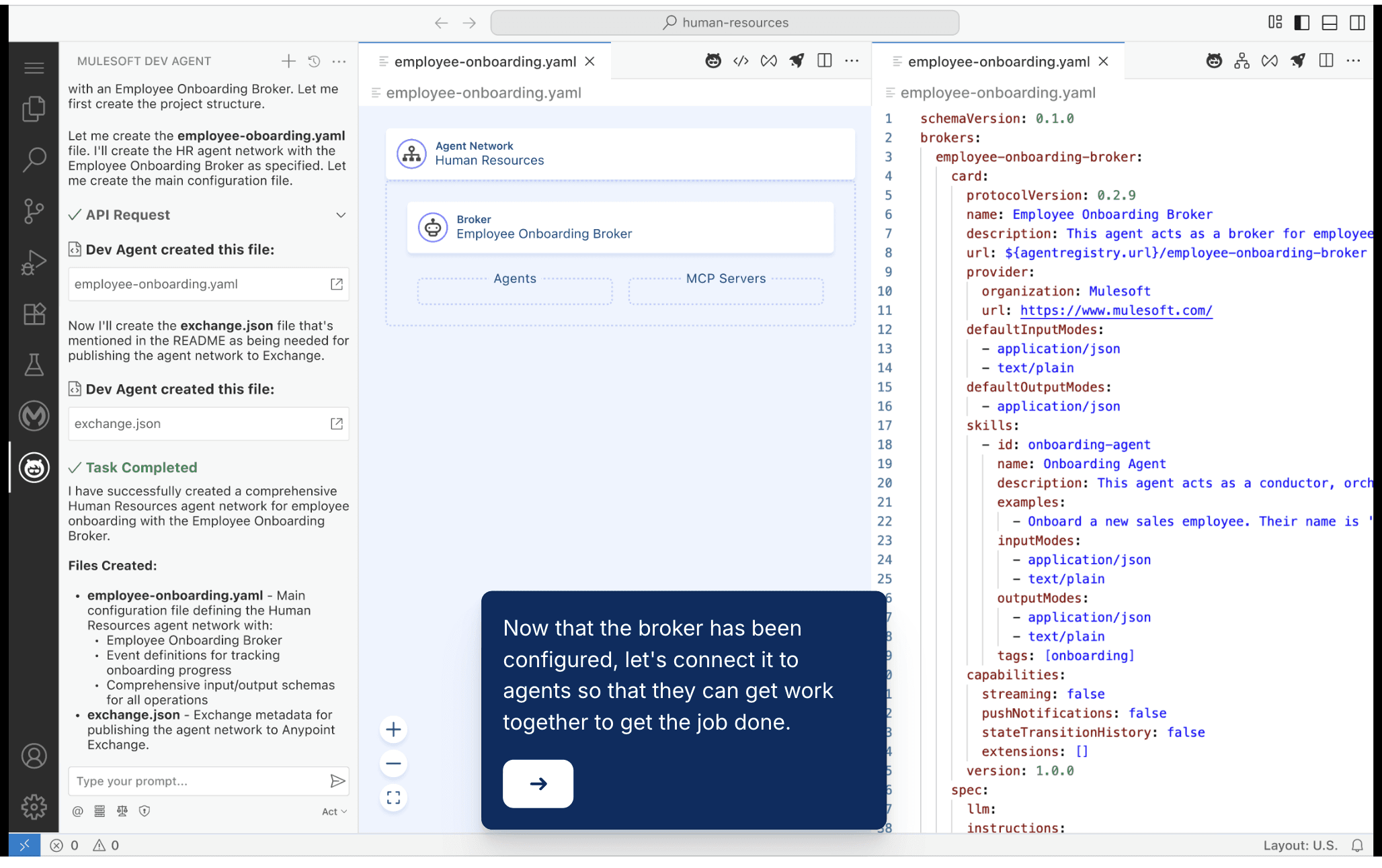
Composer sits alongside it as a no-code option for business users who need to connect common SaaS applications without developer involvement.
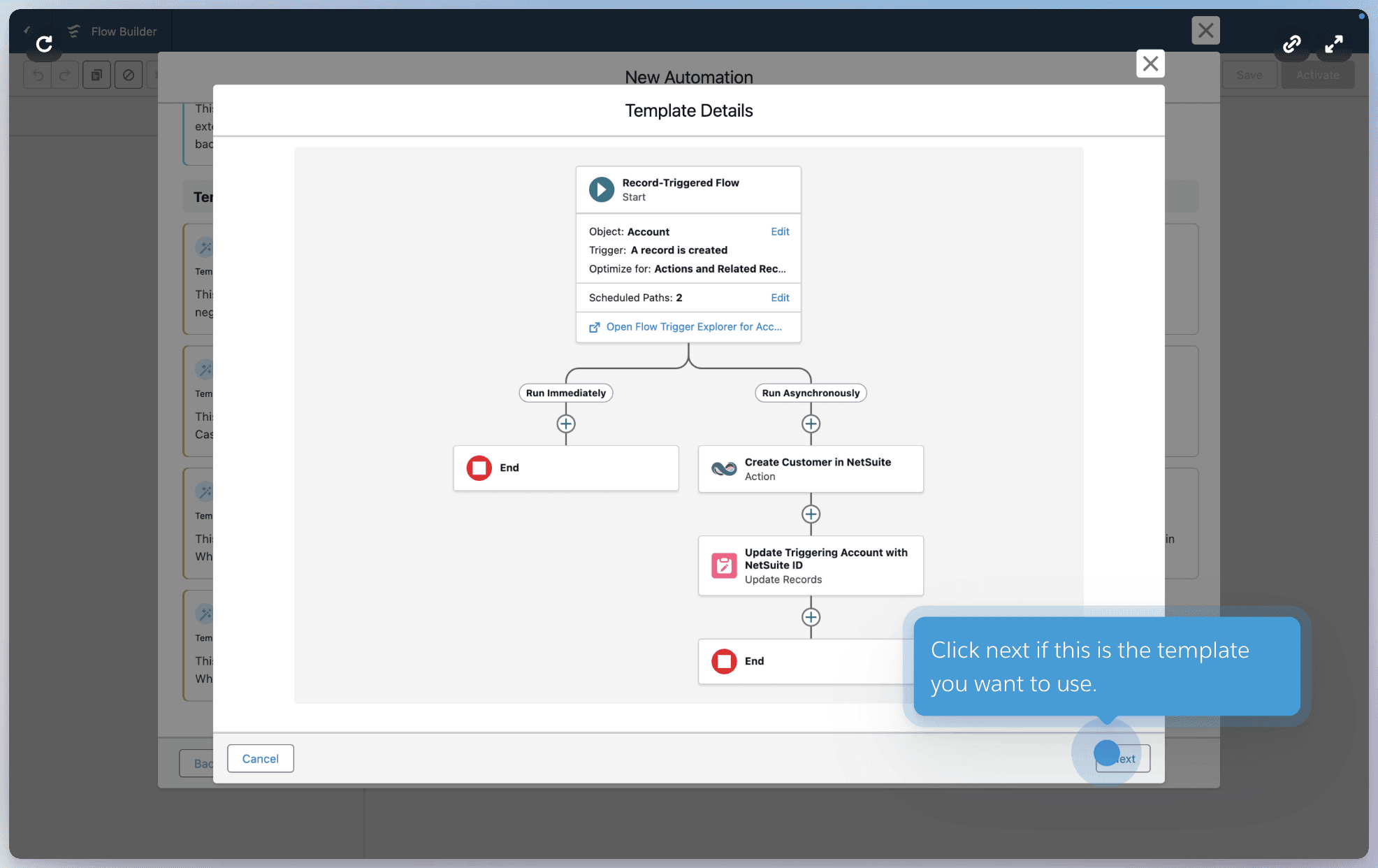
MuleSoft RPA automates tasks in legacy applications and systems that don't expose APIs using screen-recording bots that replicate human desktop actions.
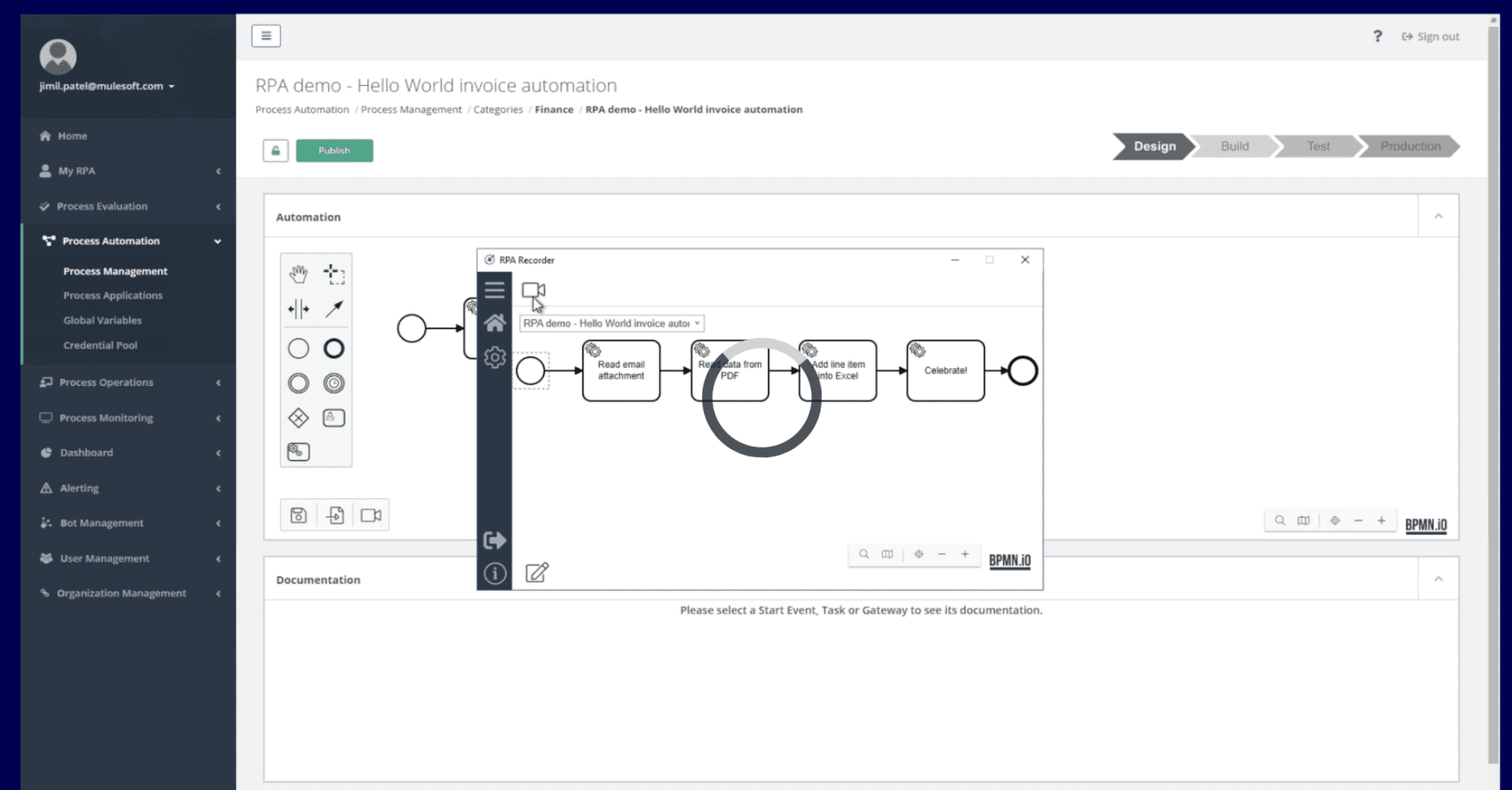
How MuleSoft Works
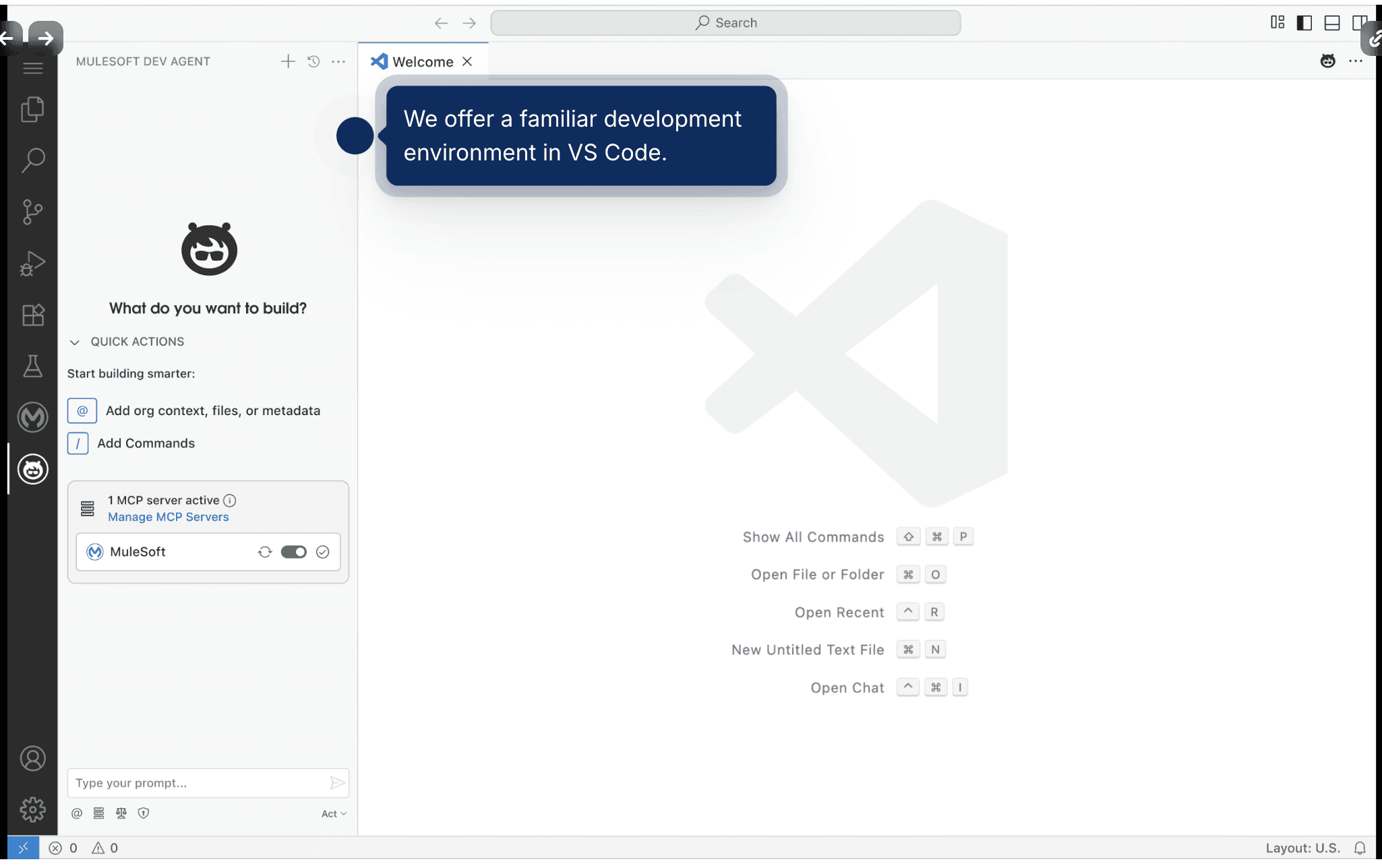
MuleSoft's automation model is fundamentally rules-based and process-driven. Flows are designed by people, bots replicate steps that people recorded, and pipelines move data along paths that developers defined. That works well for predictable, structured, repetitive tasks, and less so for high-volume workflows involving unstructured content, variable document formats, and decisions that depend on rapidly-shifting context like changing regulations or controls.
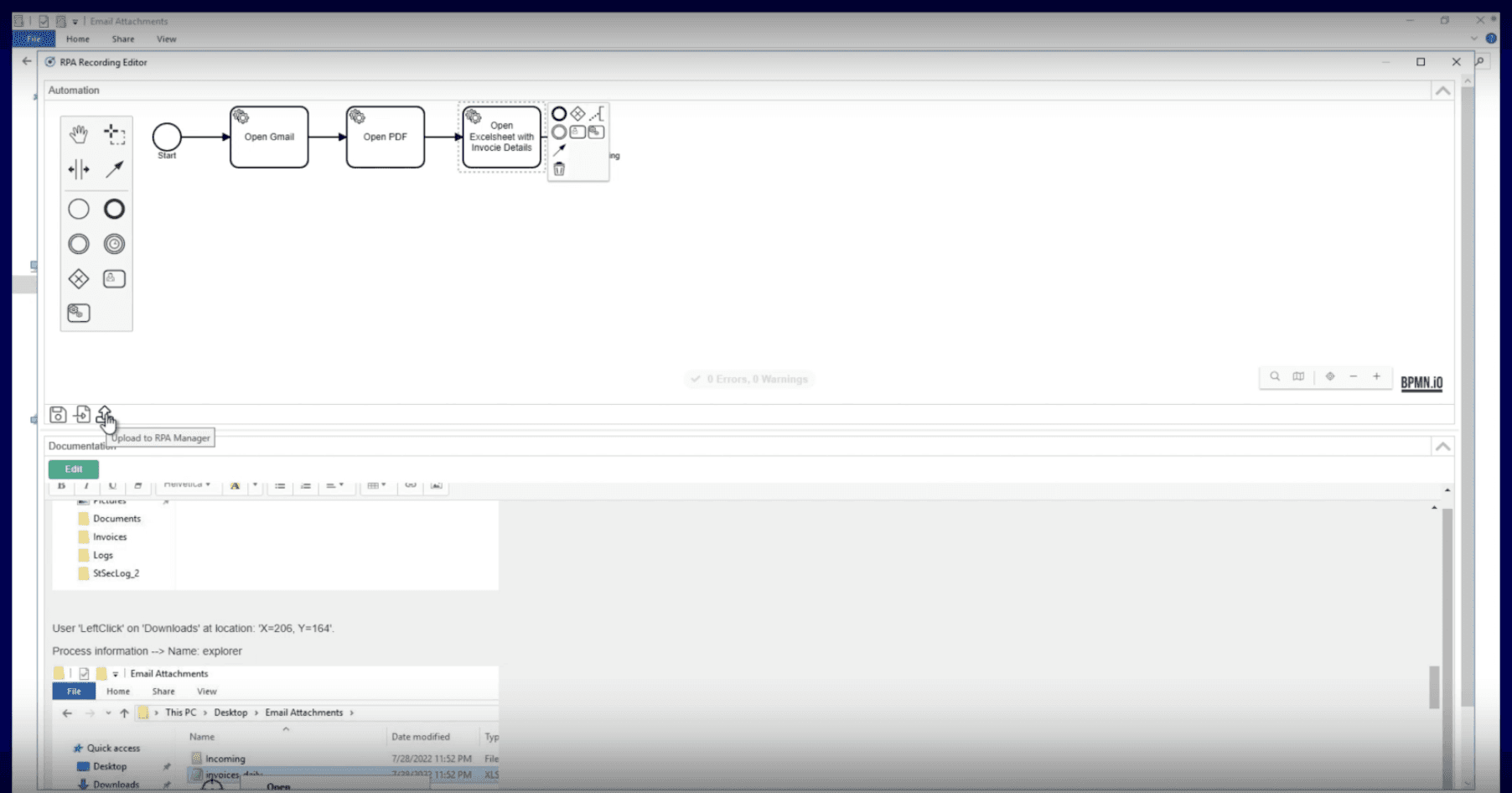
Further, MuleSoft's core products are still primarily developer-facing products that require significant configuration to handle complex, dynamic document workflows. MuleSoft's own product leadership has acknowledged that advanced agent use cases require custom API development built on top of the platform's integration layer, meaning the AI capability remains an add-on to an integration architecture, rather than the foundation of the product.
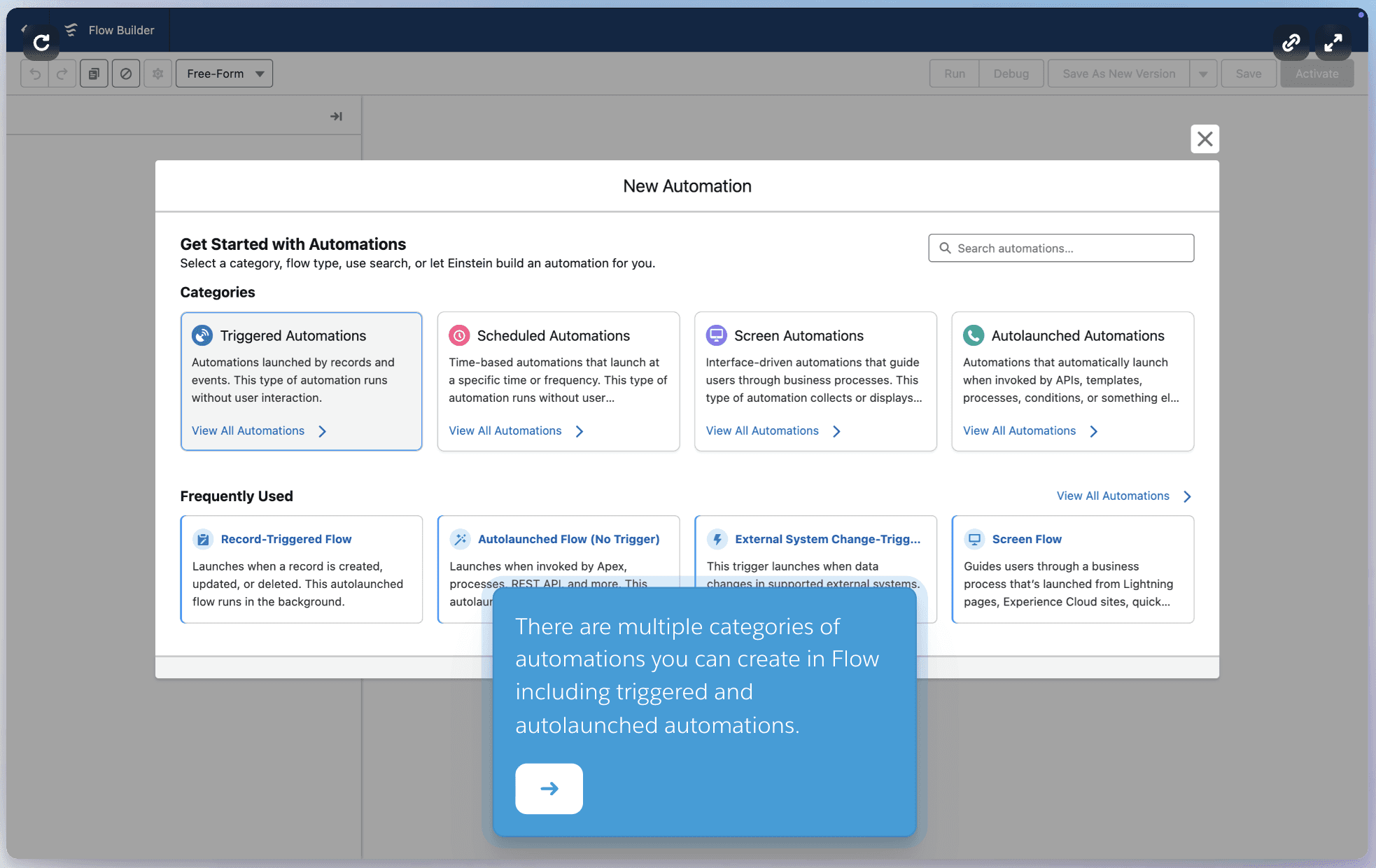
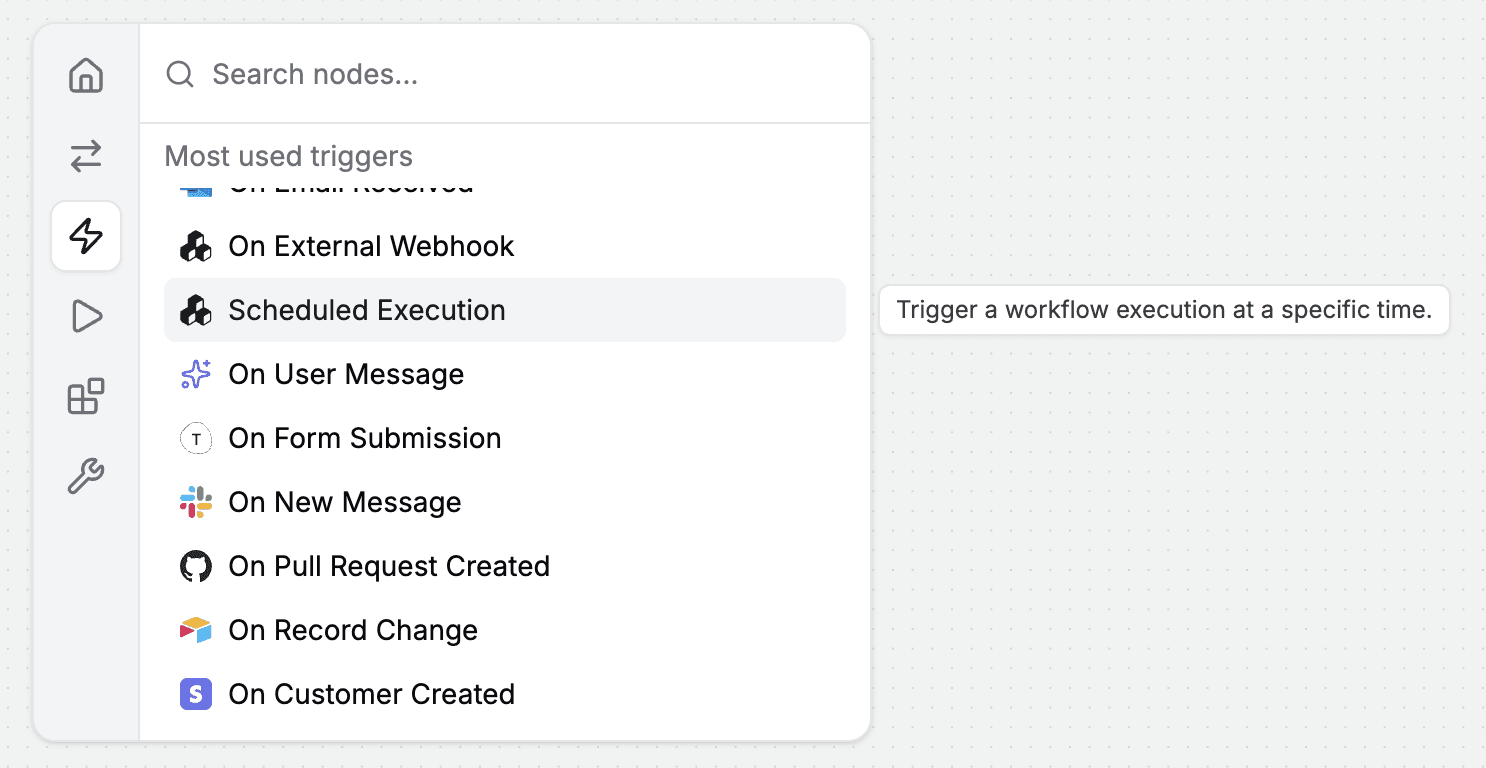
Automations only have options for triggers or scheduled execution. As such, there are no interfaces for published agents that end users can interact with, as automations just run in the background.
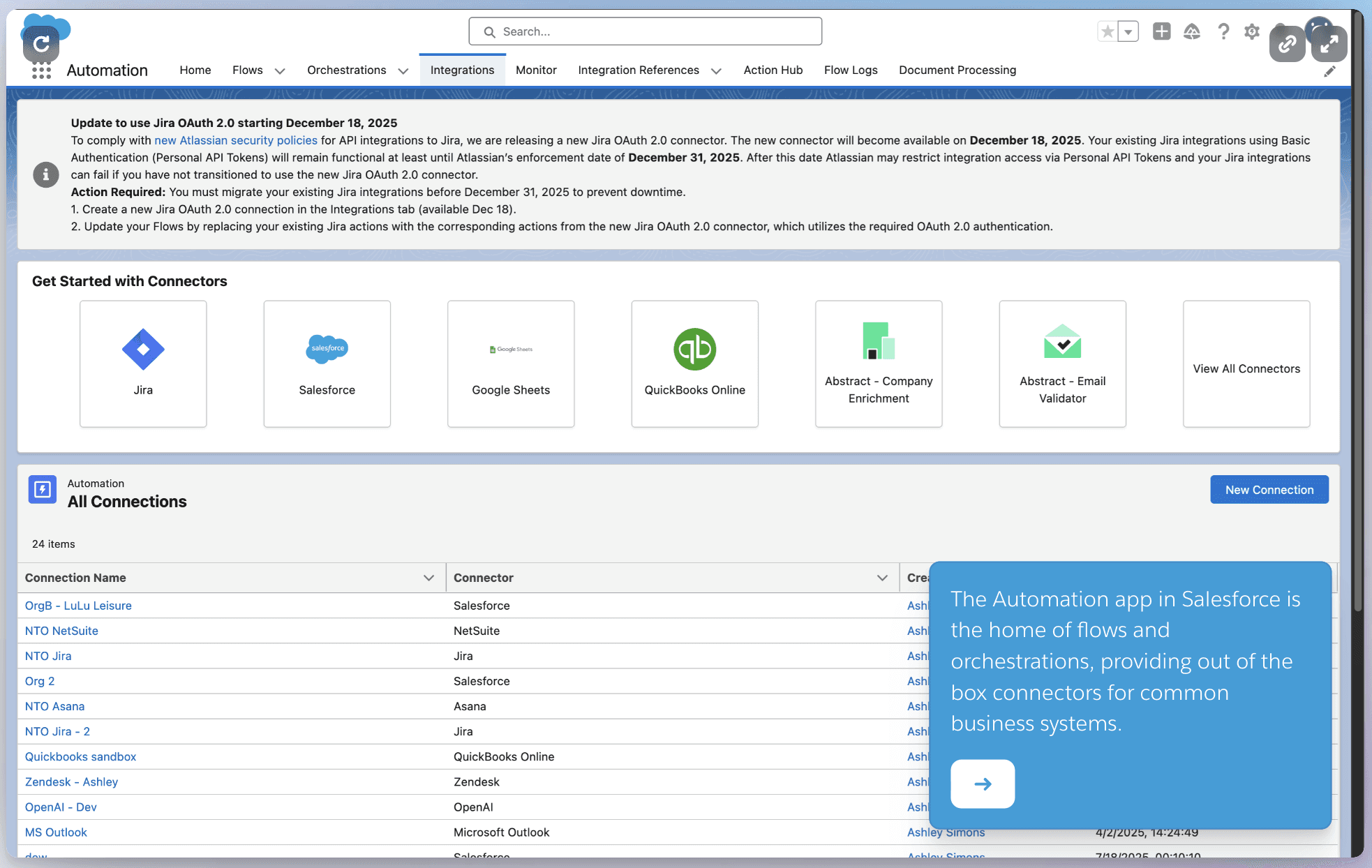
While MuleSoft does offer enterprise connections, they do not offer the latest LLMs, but are limited to some older models from just OpenAI and Anthropic. The implementation picture also matters. MuleSoft implementations typically take one to six months before anything reaches production. The platform requires certified developers with Java backgrounds for Anypoint, and all MuleSoft products have relatively challenging, cumbersome interfaces that are difficult for business users to navigate.
What StackAI Is
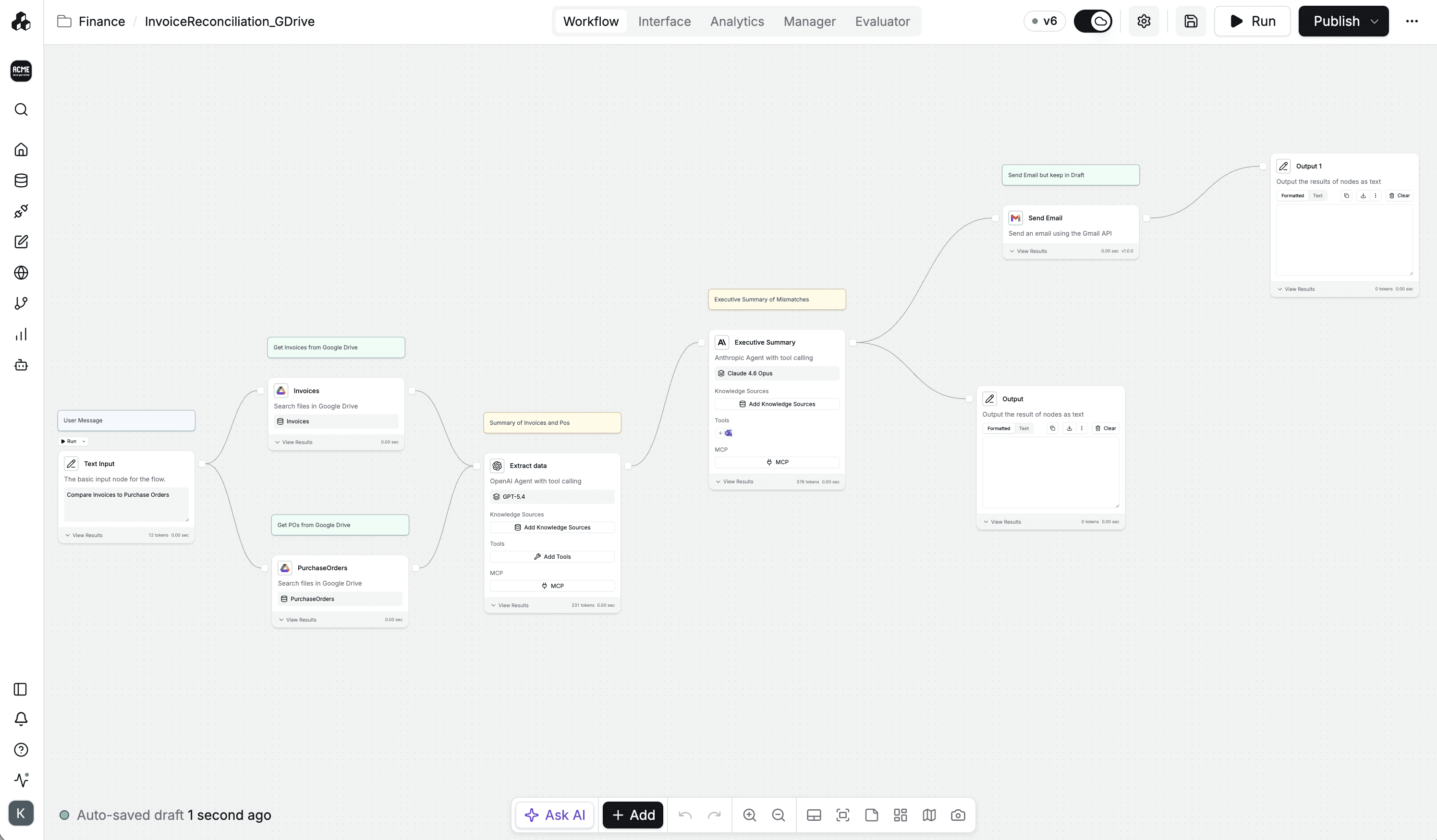
StackAI is an enterprise AI orchestration platform, not just an automation platform. Where MuleSoft connects systems and automates rule-based processes, enterprise teams use StackAI to build sophisticated AI agents that autonomously read, reason, and act within the enterprise tools they already use, powered by cutting-edge generative AI. The core product is a no-code workflow builder where technical and non-technical teams can build, deploy, and govern agentic workflows, turning complex, business-critical, multi-step processes into AI-powered automations in just minutes.
StackAI's implementation model is built around speed-to-value. Forward-deployed engineers co-build with customers from the start, while AI strategists help prioritize the best use cases and measure business value and operational savings that are generated. The typical path is a focused three month proof-of-value period: identify a high-pain, measurable use case, build it in weeks, demonstrate ROI, then expand.
How StackAI Works
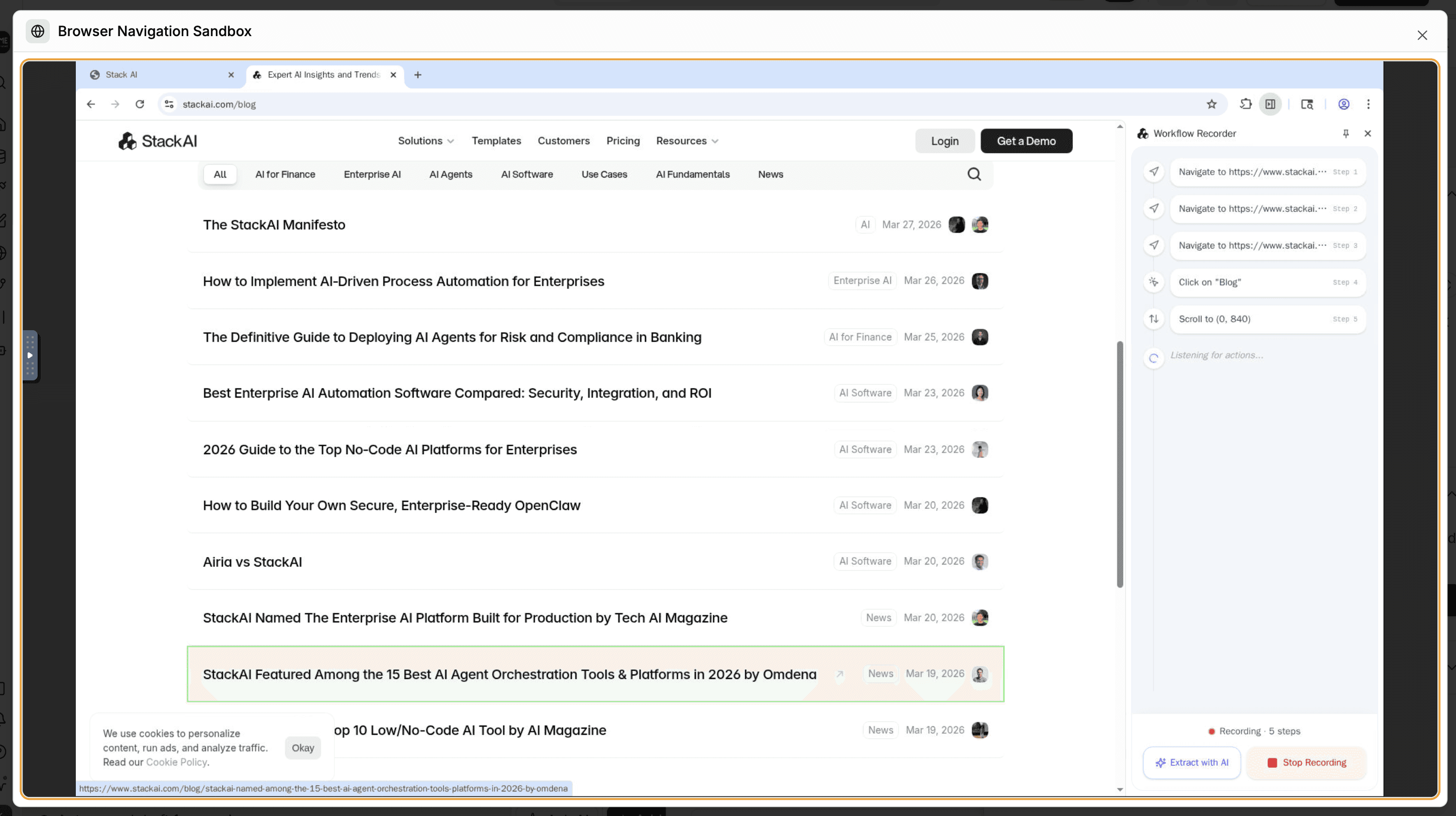
StackAI has all of the capabilities that enterprise teams need—including RPA and browser navigation for tasks that involve legacy interfaces, completing forms by extracting data, and other deterministic, repetitive processes. It's easy to record a task in the browser sandbox and save it for future use.
StackAI offers dozens of triggers, including options for scheduled execution. The platform also supports 100+ integrations across CRM, ERP, document storage, communication, and data platforms, and works with any LLM, meaning customers are never locked into a single vendor or model provider.
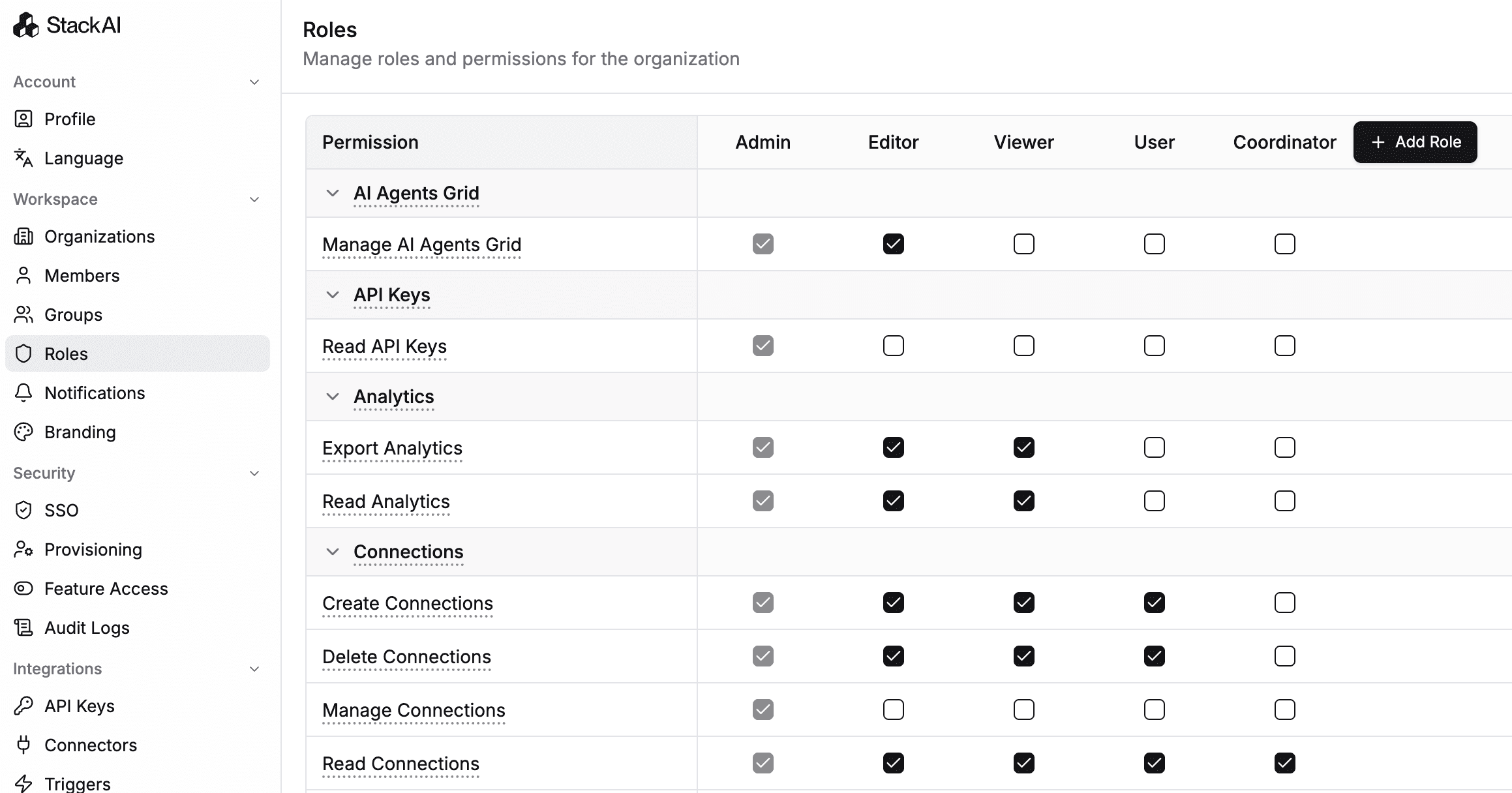
Like MuleSoft, StackAI takes governance seriously, and even offers granular role-based access control, approval workflows, version control, real-time production monitoring, and full audit logs built into the platform. For a full governance breakdown, check out this article.
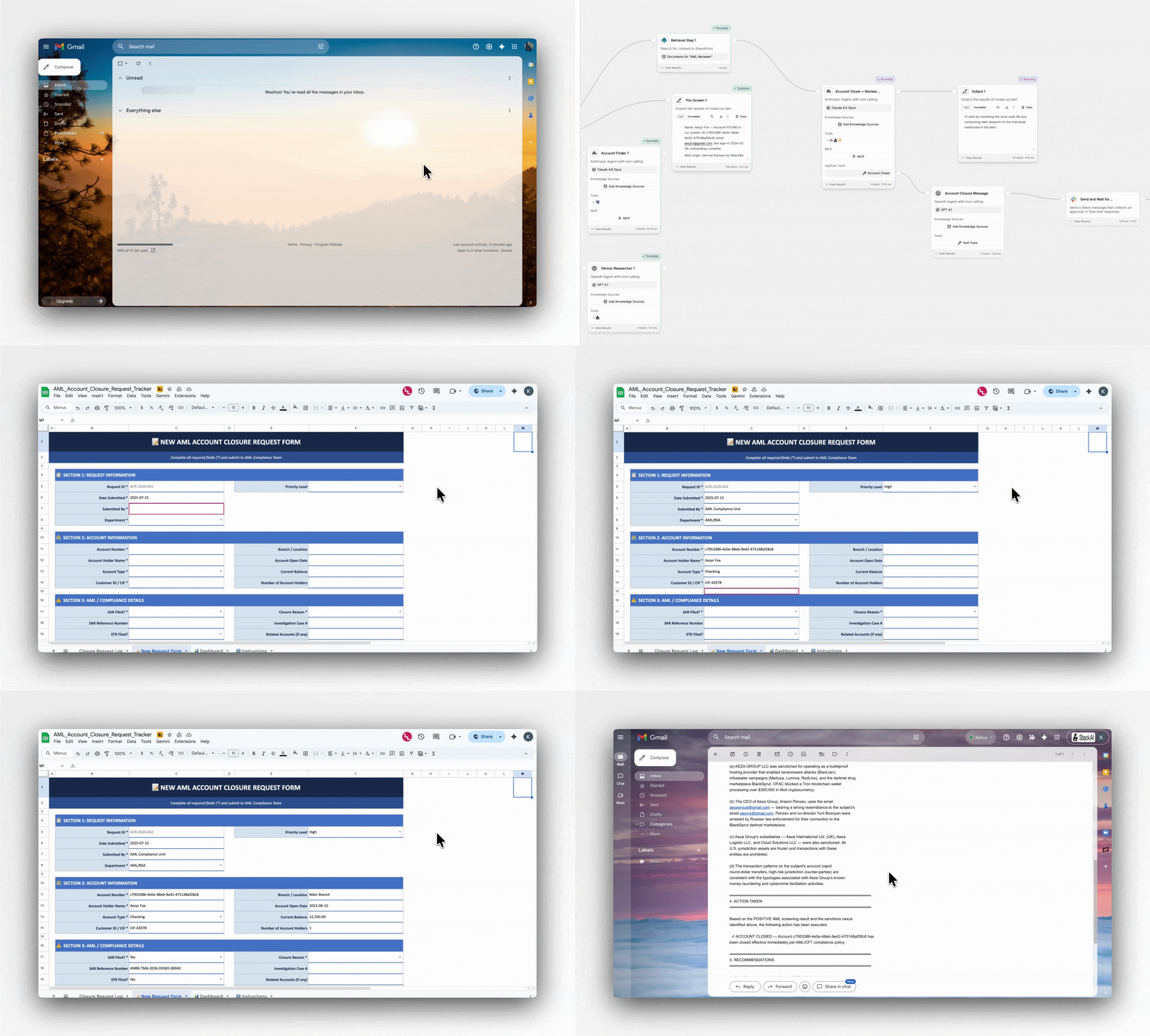
Lastly, features like Human-in-the-Loop help ensure that agentic workflows can follow deterministic steps (similar to traditional process automation), while utilizing the advanced capabilities of LLMs to interpret documents, conducting research, and reasoning over multi-step problems before humans make the final call.
Choosing the Right Platform
If the primary challenge is managing APIs at scale or automating simple, black-and-white tasks in legacy environments, MuleSoft has proven capability for that work.
But if the primary challenge is automating workflows that involve unstructured documents, variable inputs, multi-step AI reasoning, human-in-the-loop, or decisions that can't be reduced to a ruleset or a bot script, that is the problem StackAI was built for. The no-code builder, native document intelligence, browser use/RPA, and fast implementation model make it meaningfully more accessible for those use cases than a platform that has added AI incrementally on top of an integration architecture.
For enterprises deciding where to invest their AI automation budget in 2026, the use case should drive the decision. For the growing category of knowledge-intensive, document-heavy workflows that represent some of the highest labor costs in financial services, insurance, and healthcare, AI-native orchestration is where the leverage is.
Want to see how StackAI can automate your processes with AI? Get a demo with our experts.

Rohit Sangal
Solutions Engineer at StackAI