The Administrative Crisis in Specialty Care
Specialty clinics, from orthopedics and gastroenterology to dermatology, oncology, and behavioral health, share a common operational profile: high patient volume, complex payer rules, and a back office that never stops growing. Whether you're a single-site ophthalmology practice or a PE-backed MSO managing 150+ locations, the math is the same. Every hour a staff member spends chasing an authorization or reworking a denied claim is an hour not spent moving patients through the schedule.
The KPIs that matter to this audience are well known: referral-to-scheduled time, prior authorization turnaround, claim denial rate, days in accounts receivable, and FTEs per provider. The challenge has always been that improving one metric usually means throwing more bodies at the problem.
AI agents (autonomous software workflows that can read documents, query systems, make decisions, and take action) are changing that equation. Unlike simple chatbots or single-prompt tools, agents can orchestrate multi-step processes end to end, often completing in seconds what previously took a staff member 20–45 minutes.
Below, our team has compiled the twelve use cases gaining the most traction across specialty provider organizations today.
1. Claim Denial Prevention
The problem: Denials cost the average physician up to 5% of net revenue. But the majority are preventable. Most stem from eligibility issues, missing information, or coding mismatches, errors that are detectable before the claim ever leaves the building.
How AI agents help: An agent can sit between your EHR/PM system and the clearinghouse, automatically reviewing each claim against payer-specific rules before submission. It cross-references patient eligibility data, checks that diagnosis and procedure codes align with the payer's medical policies, flags missing modifiers, and verifies that referring provider information is complete. Claims that pass go through untouched; claims that don't get routed to a worklist with a plain-language explanation of what needs to be fixed.
Why it matters for specialty clinics: Specialty procedures often involve high-dollar codes with narrow payer rules (think: biologic infusions in rheumatology, or multi-level spine procedures in orthopedics). A single prevented denial on a $4,000 procedure pays for months of tooling.
2. Prior Authorization Automation
The problem: Prior auth is the single most hated administrative process in healthcare. The average authorization takes 15–45 minutes of staff time, involves faxes, phone trees, and portal logins, and the volume is only increasing. For specialties like pain management, oncology, and cardiology, auth requirements can apply to the majority of scheduled procedures.
How AI agents help: An agent can extract the relevant clinical information from the patient's chart (diagnosis, history, prior treatments, lab results), map it to the payer's specific criteria for the requested service, auto-populate the authorization form or portal, and submit it, all without a human touching the case. When a case doesn't meet criteria, the agent drafts a clinical narrative explaining medical necessity and flags it for physician review before submission.
Why it matters: Practices that have automated even 50–60% of their auth volume report reclaiming 1–2 FTEs worth of staff time and cutting referral-to-scheduled time by days.
3. Appeal Letter Drafting
The problem: When a claim is denied or an authorization is rejected, someone has to write an appeal. That "someone" is usually a billing specialist or office manager who spends 30–60 minutes per letter pulling clinical documentation, citing payer policy language, and constructing a medical-necessity argument. Many practices simply write off low-dollar denials because the cost of appealing exceeds the recovery.
How AI agents help: Given a denial reason code and access to the patient's chart, an agent can draft a complete, payer-specific appeal letter in under a minute. It pulls the relevant clinical notes, references the applicable coverage policy, cites peer-reviewed literature when appropriate, and formats the letter to the payer's submission requirements. A human-in-the-loop step makes sure that review and signoff happens correctly, but the heavy lifting is done.
Why it matters: Practices report appeal overturn rates above 60% when letters are well-constructed. Automating the drafting process makes it economically viable to appeal denials that were previously written off.
4. Therapist and Clinician Notes Compliance Checking
The problem: In behavioral health, physical therapy, and rehab specialties, clinical documentation must meet specific payer requirements to support billing. A therapist's progress note that doesn't demonstrate medical necessity, functional improvement, or treatment plan adherence will trigger a denial even months after the visit, when recollection is gone and rebilling is difficult.
How AI agents help: An agent reviews completed notes against payer-specific documentation requirements in real time (or in a nightly batch). It checks for required elements: measurable goals, functional baselines, progress indicators, treatment plan references, and appropriate time-based or complexity-based coding support. Notes that fall short are flagged with specific, actionable feedback before the claim is submitted.
Why it matters: Each denied claim costs $25–$117 to rework, and only 35% of denied therapy claims are ever corrected and resubmitted, meaning most of that revenue is simply gone. Catching issues at the point of documentation with AI can make a massive revenue impact in very little time.
5. Patient Flow Orchestration
The problem: Discharge planning, post-visit note distribution, follow-up scheduling, and transportation coordination are a tangle of manual handoffs. In post-acute care, home health, and surgical specialties, a single dropped ball, like a discharge summary that doesn't reach the PCP or a follow-up that doesn't get scheduled, can lead to readmissions, lost patients, and compliance risk.
How AI agents help: An agent can monitor discharge events and automatically trigger a sequence: generate and route the discharge summary, schedule the follow-up appointment, send the patient a transportation confirmation (or arrange a ride through an integrated service), and notify the care team. Each step is conditional: if the patient doesn't confirm, the agent escalates. If the PCP's fax fails, it retries or routes to a portal.
Why it matters: Referral leakage (patients who are referred for a procedure but never schedule) is one of the largest silent revenue losses in specialty care. Automating the post-visit and post-discharge workflow directly attacks that leakage.
6. Call Center Compliance and Quality Monitoring
The problem: Many specialty groups operate centralized call centers for scheduling, triage, and patient inquiries. These calls are subject to HIPAA requirements, state-specific consent rules, and internal quality standards. Manual quality assurance typically covers 2–5% of interactions.
How AI agents help: An agent can process call transcripts (or real-time audio streams) and evaluate every call against a compliance checklist: Was the patient's identity verified? Was consent obtained before discussing PHI? Were required disclosures made? Were scheduling protocols followed? Results are scored and surfaced in a dashboard, with flagged calls routed for human review.
Why it matters: For PE-backed groups scaling rapidly through acquisition, call center quality is one of the first things to degrade. Automated compliance monitoring provides consistent oversight without scaling the QA team linearly with call volume.
7. Care Manager Prioritization and Outreach Drafting
The problem: Care management teams in value-based arrangements are responsible for proactive outreach to high-risk patients. But identifying which patients need attention today and crafting personalized outreach is time-consuming. Most care managers spend a significant portion of their day on administrative triage rather than actual patient engagement.
How AI agents help: An agent can ingest data from the EHR, claims feeds, and ADT (admission/discharge/transfer) notifications to build a daily prioritized worklist. It identifies patients with recent ED visits, missed appointments, gaps in care, or medication adherence concerns, and ranks them by acuity and intervention opportunity. For each patient, it drafts a personalized outreach message (call script, text, or letter) that references their specific situation.
Why it matters: Care management is a margin lever in value-based contracts, but only if the team is reaching the right patients at the right time. Automation shifts the care manager's role from data analyst to patient advocate.
8. Patient-Facing Chatbot
The problem: Patients call for the same things: appointment availability, prep instructions, insurance questions, prescription refill status, directions to the office. Each of these calls costs $5–$8 to handle through a live agent and contributes to hold times that frustrate patients and staff alike.
How AI agents help: A HIPAA-compliant chatbot (deployed on the practice website, patient portal, or via SMS) can handle the most common patient inquiries autonomously. It can check appointment availability, provide procedure-specific prep instructions, answer insurance and billing FAQs, and route complex questions to the appropriate department. Critically, modern agent-based chatbots can be grounded in the practice's actual knowledge base (formularies, prep documents, office policies) so answers are accurate and specific, not generic.
Why it matters: Even deflecting 30–40% of inbound call volume has a measurable impact on staffing requirements and patient satisfaction scores.
9. Patient 360 — Unified Patient Context
The problem: Clinical and administrative staff frequently need a complete picture of a patient (insurance status, visit history, outstanding authorizations, balance due, recent communications, referral status) and that information lives in 3–5 different systems. Assembling it manually takes time and introduces errors.
How AI agents help: An agent can query across the EHR, practice management system, billing platform, and communication logs to assemble a single, structured "Patient 360" view on demand. Staff ask a question in natural language ("What's the auth status for Jane Doe's upcoming MRI?") and get a synthesized answer with source references, rather than logging into three portals.
Why it matters: In high-volume specialty clinics, front-desk and intake staff may process 80–120 patients per day. Saving even two minutes per patient interaction compounds into hours of recovered capacity.
10. Automated Visit Summaries
The problem: After-visit summaries (AVS) are a regulatory requirement and a patient satisfaction driver, but generating a clear, patient-friendly summary from a clinician's note is a non-trivial task. Many practices either produce generic, unhelpful summaries or rely on clinicians to write them manually, adding to documentation burden.
How AI agents help: An agent reads the clinician's encounter note and generates a plain-language visit summary tailored to the patient: what was discussed, what was found, what the plan is, what medications were changed, and what the patient needs to do next. It can be generated in the patient's preferred language and reading level, and delivered automatically through the patient portal or via print at checkout.
Why it matters: High-quality visit summaries reduce follow-up calls ("What did the doctor say?"), improve medication adherence, and contribute to patient satisfaction scores, all of which matter for both fee-for-service reputation and value-based contract performance.
11. Patient Intake Form Processing
The problem: Patient intake is a bottleneck at every specialty clinic. New patients fill out multi-page forms (demographics, insurance, medical history, consent, HIPAA acknowledgment), and staff manually enter or verify that data against the EHR. Errors at intake cascade downstream into claim denials, eligibility failures, and chart inaccuracies.
How AI agents help: An agent can process completed intake forms (digital or scanned) and extract structured data: patient demographics, insurance member IDs, referring provider information, medication lists, allergy histories, and surgical histories. It cross-references extracted data against the EHR for existing patients, flags discrepancies, and pre-populates registration fields. For new patients, it can verify insurance eligibility in real time and alert staff to coverage issues before the patient is seen.
Why it matters: Intake is the front door to revenue. Every data error introduced at intake has a multiplier effect on downstream billing and clinical workflows. Automating extraction and verification at this stage is one of the highest-ROI interventions available.
12. Referral Management and Revenue Capture
The problem: Specialty clinics can live and die by referrals. When a referral comes in via fax, EHR message, or portal, it needs to be triaged, matched to the right provider, checked for insurance and auth requirements, and converted into a scheduled appointment. Every day of delay increases the probability the patient goes elsewhere.
How AI agents help: An agent monitors incoming referral channels, extracts the clinical and administrative details, verifies insurance eligibility, determines whether prior authorization is required (and initiates it if so), and either auto-schedules the patient or places them in a scheduling queue with all necessary context attached. The referring provider receives an automated acknowledgment, and the patient receives outreach to confirm the appointment.
Why it matters: Studies consistently show that ½ of all referrals never end in an actual visit. For a mid-size orthopedic group, that leakage can represent millions in annual lost revenue. Closing the referral loop is arguably the single highest-impact operational improvement available to most specialty clinics.
What to Look For in an AI Agent Platform
If you're evaluating AI agent solutions for a specialty clinic or MSO environment, a few considerations are worth keeping in mind:
HIPAA compliance and BAA coverage. This is non-negotiable. Any platform handling PHI must offer a signed Business Associate Agreement and demonstrate appropriate technical safeguards (encryption at rest and in transit, access controls, audit logging).
EHR and PM system integration. The value of an agent is directly proportional to the systems it can read from and write to. Look for platforms that support connections to your specific EHR and practice management/billing systems.
Customizability without heavy engineering. MSOs managing multiple specialties need the ability to configure workflows per specialty, per payer, and per location, ideally without a six-month implementation cycle.
Human-in-the-loop controls. The best agent workflows keep humans in the decision loop for high-stakes actions (submitting a claim, sending a patient communication) while automating the preparation and data assembly that consumes most of the time.
Auditability. In healthcare, you need to know what the AI did, why it did it, and what data it used. Look for platforms that provide full execution logs and audit trails, with global analytics.
The Bottom Line
The administrative overhead in specialty care isn't a new problem, but the tools available to address it have fundamentally changed. AI agents aren't replacing clinical judgment or eliminating the need for skilled staff, they're removing the repetitive, rule-based, data-assembly work that consumes 28+ hours per week of administrative time today.
For specialty clinics and PE-backed MSOs focused on EBITDA expansion, the calculus is straightforward: every authorization completed autonomously, every denial prevented before submission, and every referral converted without manual intervention flows directly to the bottom line. The organizations moving fastest on these use cases are deploying it against specific, measurable operational KPIs and tracking the results in dollars and FTEs.
Want to see these use cases in action? Book a demo with StackAI’s healthcare team, or learn more about StackAI for healthcare here.
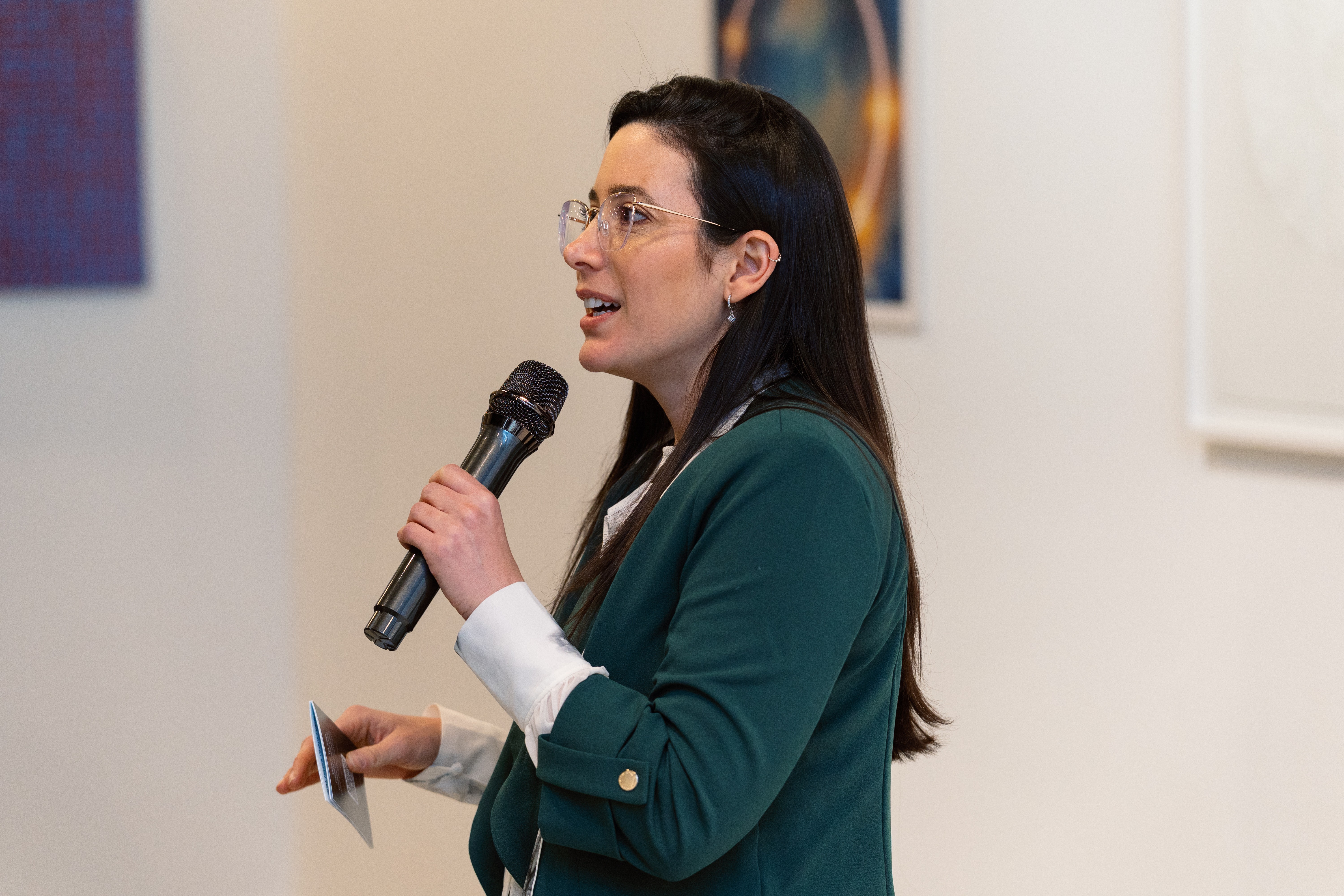
Shani Fargun
VP of Healthcare at StackAI





